The White House website has censored a video of French Pres. Francois Hollande saying that “Islamist terrorism” is at the “roots of terrorism.”
The White House briefly pulled video of a press event on terrorism with Pres. Obama, and when it reappeared on the WhiteHouse.gov website and YouTube, the audio of Hollande’s translator goes silent, beginning with the words “Islamist terrorism,” then begins again at the end of his sentence.
Even the audio of Hollande saying the words “Islamist terrorism” in French have, apparently, been edited from the video.
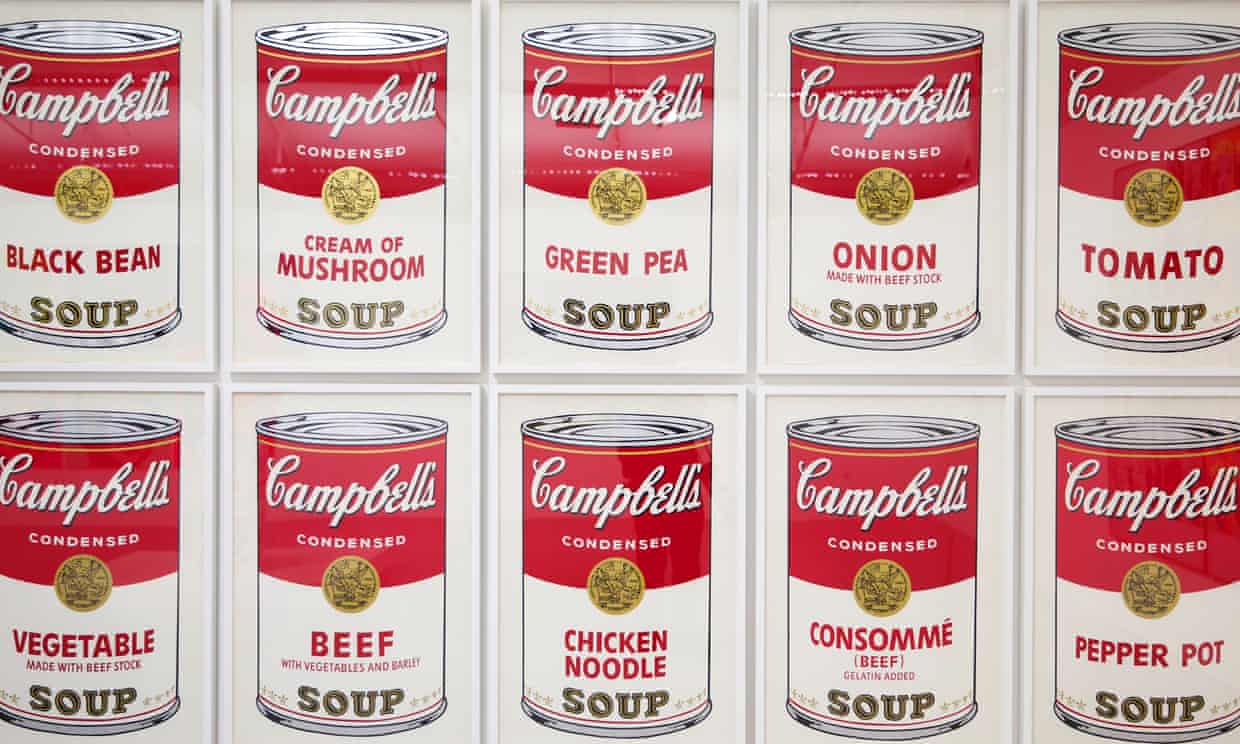
The iconic US soup manufacturer, Campbell’s, has said that it will stop using Bisphenol-A (BPA) in cans by mid-2017, after the hormone-mimicking chemical was found in all 15 of its cans tested in a US survey.
Two-thirds of the nearly 200 food containers analysed by the Ecology Centre in Michigan were found to contain BPA, with 70% of Del Monte tins testing positive and other companies’ tins turning in similar results. The endocrine disruptor was also found in tests of all three ‘Carnation’ tins by Nestle.
Bart Staes, a Green MEP, said: “Two-thirds of cans is really a shocking figure and absolutely not acceptable. We have to remove those cans from the food chain and I think an inquiry is needed because I can imagine that this is not only a Campbell’s problem.”
Contact with BPA has been linked to breast and prostate cancer, asthma, obesity and diabetes, but the debate about tolerable levels of exposure is ongoing.
The EU has banned baby bottles containing BPA and France has outlawed the chemical altogether, proposing a similar prohibition across Europe.
Staes called for the European commission’s food and veterinary office to urgently establish whether cans containing endocrine disruptors were being imported into the EU.
He said: “We have to use the tools we have to investigate imports, alert member states and ask the food and veterinary office to control all imports of those kinds of foods to the EU, which they are entitled to do”.
The chemical was detected in soup can linings, from where it can potentially migrate into food. However, the study did not measure the quantities of BPA present in the polymer linings.
Soup and gravy cans were the most likely tins found to contain BPA, while cans of corn and peas were the least. Milk cans were also very likely to be made with the chemical.
Bev Thorpe, one of the report’s authors said that Campbell’s acted within days of receiving an advance copy of the study and reports indicate that Del Monte are doing the same.
“Our priority throughout this transition has been, and will continue to be, food safety,” said Mike Mulshine, packaging manager at Campbell’s. “We have tested and conducted trials with hundreds of alternatives to BPA lining and believe the acrylic and polyester options will ensure our food remains safe, affordable and tastes great.”
A spokeswoman for Nestle said: “Despite BPA being safe and posing no health risk to consumers, we have made a public commitment to remove it from our packaging materials. We have already eliminated BPA from our packaging for infant foods and are working towards completing the full transition of our product portfolio to non-BPA food contact packaging, where suitable safe alternatives exist.
In March, a Netherlands’ health ministry report recommended reducing exposure to BPA wherever possible, particularly for small children and women who are pregnant or breast-feeding.
However regulating the substance at the EU level has proved contentious. The European Chemicals Agency risks assessment board classified BPA as toxic for sexual reproduction – affecting both fertility and sexual function – but the last European Food and Safety Authority assessment found “no health concern for any age group” exposed to BPA.
Efsa is due to revise that judgement by the end of the 2016 but after several similar re-analyses in the last decade, campaigners warned of what they called “paralysis by analysis”.
“BPA is one of the most studied chemicals out there and PCBs were banned on less evidence,” said Lisette van Vliet, a senior advisor to the Health and Environmental Alliance. “It is outrageous, given what we know about the harm it can cause, that we are not seeing swift obligatory action to minimise exposure to BPA.”
Limiting overall BPA exposure is made more difficult by the fact that it is found in so many everyday products: toys, medical devices, cash register receipts, paints and coatings.
Some commonly-used substitutes for BPA are also far from perfect. More than a third of nationwide brands surveyed by the Ecology Centre used PVC compounds made from vinyl chloride, a known carcinogen.
The European commission is expected to finally publish criteria for identifying endocrine disruptors this summer, after several delays that have been attributed to industry pressure.
Note: Statements from Campbell’s and Nestle were received after first publication of this story and then added.
After months of tense dealings with Republican presidential front-runner Donald Trump, the Republican National Committee’s biggest challenge is beginning to take shape: how to navigate a scenario in which Trump leads his challengers in votes and delegates heading into the convention, but loses the nomination.
On Thursday in Washington, RNC Chairman Reince Priebus met with Trump and his inner circle, with the billionaire and his aides inquiring about delegate rules and protocol. Trump is poised to head to the party’s July convention just short of the 1,237 delegates needed to clinch the nomination. His leading rival, Texas Senator Ted Cruz, is already stoking the flames of a “Stop Trump” movement, and organizing an elaborate operation to win every delegate at the Cleveland convention.
Trump has been adamant that the candidate with the most votes and delegates—even if that candidate misses the majority threshold—should be the party’s nominee. In an MSNBC town hall on Wednesday, he described the process as “unfair.”
“I have millions of more votes—that’s my leverage,” Trump said.
A Bloomberg Politics national poll in March showed that 63 percent of Republican voters support Trump’s view that the candidate with the most delegates and voters should win the nomination.
But party rules dictate a series of votes to determine the nominee, should he or she fail to break the 1,237-delegate threshold. RNC officials have launched a public-relations push in recent weeks to educate voters and the media about the process. They described it on their website and planned to host a conference call with reporters on Friday. The push signals the beginning of an effort by the party to lay the groundwork for what could unfold, and encourage voters to support the result.
“Donald Trump may well end up having the most votes anyone has ever gotten in a Republican primary this time. That was true for Mrs. Clinton and she didn’t get the nomination,” in 2008, said Ron Kaufman, a member of the RNC’s rules committee. “The thing that the party has to do is to make sure the voters believe their votes matter to keep them in the party for November.”
A Pew Research Center poll taken last month underscored how difficult that task may be. Just 38 percent of Republican and GOP-leaning voters said the party would unite solidly behind Trump if he’s the nominee, while 56 percent said disagreements within the party will keep many Republicans from supporting him.
RNC officials at Thursday’s meeting raised concerns that Trump could portray the party as having tainted the process in favor of a particular candidate, said a person familiar with the meeting who asked not to be named so as to discuss the matter more freely. Trump declined to state one way or the other what his strategy would be, but reiterated that he expected to be treated fairly in the process, the person said.
The party said in a statement released Thursday that Trump and Priebus “had a productive conversation about the state of the race.”
Kaufman said party officials “have to make sure the RNC runs the convention by the rules, openly, honestly and transparently. And making sure people understand the rules so it’s clear that we’re doing it by the book.”
That’s what voters—both Trump critics and detractors, and those still undecided—say they want. “The establishment has been picking our candidates for years,” said Pattie Krych of Appleton, Wisconsin, who said she’s undecided between Trump and Cruz. “They just need to let the process play out. If Trump wins, so be it—he’s who we picked.”
Dan Brown of Brodhead, Wisconsin, said he’s voting for Trump and is skeptical that RNC officials are already trying to take the nomination away from him. “If they have a way to screw Trump out of the nomination, they will,” he said. “And I won’t vote in a general election if they do. They’re telling me that my vote means nothing.”
In recent weeks, Trump has sought to formalize a delegate strategy. He hired Paul Manafort, an iconic Washington political strategist, to head up his delegate strategy, with Ben Carson’s former campaign manager, Barry Bennett, helping him.
“Someone is going to win and someone will lose and usually losers aren’t happy,” said Kaufman, who has not endorsed a candidate. “All we can do is make sure it’s honest and transparent by the rules. It’s going to be fine in the end. I have no idea what’s going to happen. I don’t believe anyone does.”



 Freedom Rider
 radioroger2015
 Steve
Steve