
Tag Archives: fast track

Last Chance to Stop Fast Track: Sen. Sessions Blasts Ugly Facts

By William F. Jasper from THE NEW AMERICAN MAGAZINE
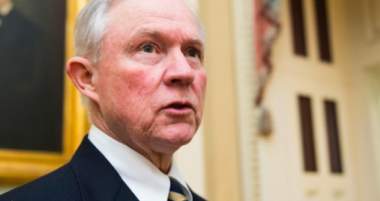
Last Chance to Stop Fast Track: Sen. Sessions Blasts Ugly Facts

In a last-hour attempt to stop the U.S. Senate from committing a most dangerous act, Senator Jeff Sessions (R-Ala.) has once again taken the heroic stance of lone warrior, warning fellow Republicans against giving President Obama Trade Promotion Authority (TPA, aka Fast Track). After weeks of complicated maneuvering and a confusing jumble of votes, the stand-alone TPA bill passed by the House last week is set to go back to the Senate on Tuesday, for what could be the final vote to confer what Senate Majority Leader Mitch McConnell (R-Ky.) has admitted is “an enormous grant of power, obviously, from a Republican Congress to a Democratic president.”

Much has been learned in the past month since the Senate first approved Fast Track; there can now be no excuse for those who claim to support it under the false justification that it will facilitate trade and promote jobs.

“More than four weeks have passed since the Senate first voted on whether to grant the Executive six years of fast-track authority,” says Senator Sessions. “In that time, an enormous amount has been discovered about how the President plans to use this authority – information that was either not known or understood when the vote was held. This includes the Administration’s pledge to use the agreement to impose ‘environmental governance.’”

“It has become increasingly clear that the President’s Trans-Pacific Partnership (TPP) is far more than a trade deal,” Sen. Sessions wrote in a Sunday op-ed for Breitbart.com. “It forms an enduring, self-governing political entity with vast regulatory power. Yet fast-track – which has led without fail to the adoption of every covered agreement since its inception – would rush it through with less legislative scrutiny than a Post Office reform bill.”

“Second chances do not come often,” Sessions noted. “We now have new information and a new vote. Which means the Senate has a second chance to slow down and demand answers about the President’s plans before agreeing to fast-track their adoption.”

That would seem to be plain and simple prudence that even the dullest solon would recognize and follow. But apparently not, even though, as the good senator from Alabama points out, President Obama has refused to answer the most simple but crucial questions about how he plans to use fast-track powers. “He will not even answer whether he believes his plan will increase or reduce the trade deficit, increase or reduce manufacturing jobs, or increase or reduce wages,” Sessions notes. “Concerns raised about how this new Pacific Union [under the TPP] will impact our sovereignty have been met with only a continued unwillingness to reply to any questions about the limits of its reach and power.”

Senator Sessions reminds his colleagues that the TPP is only the first of a mammoth ObamaTrade trifecta that also includes the Transatlantic Trade and Investment Partnership (TTIP) and the Trade in Services Agreement (TiSA), both of which remain completely secret and unavailable for review by our elected legislators. The TPP draft is available to senators and representatives only under very restrictive conditions.

In a similar alarm he issued in a June 17 press release, Sessions warned that America’s national sovereignty is in dire danger from the TPP/TTIP/TiSA pseudo-free trade assault:

According to the European Commission, the TiSA agreement—which most House and Senate members did not know about when they voted—will follow in the footsteps of the WTO’s Trade in Services Provisions, which has already inhibited the U.S. from making needed immigration changes. The European Commission says the EU “wants as many countries as possible to join the agreement.” We have already seen how the EU has curtailed sovereignty in Europe; we do not want to follow in its footsteps.

Why the Mad Rush?

“The more vast, the more grand, the more ambitious the design the more important it is to slow down – not to grease the skids. Congress must retain its powers of amendment and review, as well as its treaty powers, for agreements that clearly extend far beyond trade. And Congress must protect the power of the individual citizen to control those who would seek to control them,” the Alabama solon warns.

What is really at work here? Sessions points a finger at the dark forces that are guiding this corrupt process and the malevolent goal they intend: “The transnational entities stitching these compacts together have always desired a governance structure outside the reach of the ordinary voter; as conservatives we should never rush into the unknown on the promise that utopia lies across the abyss.”

Is it stupidity or cupidity, then, if senators ignore the abyss and still vote for TPA, in view of plain truth about Fast Track’s phony utopian promises? Either way, a vote for Fast Track tomorrow would be totally inexcusable, and political retribution should be unforgiving and unmistakable.

To send a message to your U.S. senators opposing TPA, click here.

Photo of Sen. Jeff Sessions: AP Images

Related stories:

Senator Sessions to Obama: Stop Fast Track Push, Release Secret Trade Documents

GOP Senators Isakson and Sessions Duel Over TPP “Trade” Scheme

7 Reasons Why Trade Promotion Authority/Fast Track Must Be Defeated

10 Reasons Why You Should Oppose TPP and TTIP

Boehner Purges Conservatives Who Defy on ObamaTrade Votes

Mr. Congressman, READ the Secret ObamaTrade Bills BEFORE You Vote!

Senator Reads the TPP and Exposes Its Contents; Other Elected Officials Should Do the Same

By Kevin Zeese, Popular Resistance | Op-Ed, REPOSTED FROM TRUTHOUT

Senator Jeff Sessions (R-AL) is one of the few members of Congress who has taken the time to jump through the hoops and read the Trans-Pacific Partnership (TPP). But, he has gone a step farther than other members - he told members of Congress what he read. He told the truth about what the TPP says and why Congress should oppose it in a five page letter to his colleagues.

Sessions’ action flies in the face of the threats made by the US Trade Representative to prosecute elected officials who tell people what is in the trade agreement. Others should follow his example and get out the truth about the TPP.

The debate in the Senate begins on Tuesday, May 19. This is an opportunity for Senators to tell their colleagues the truth about what is in the TPP. Sessions’ “Dear Colleague” letter was leaked and reported in Breitbart. Senators from both parties may want to take a similar approach. Even better, during the debate on the Senate floor there will be an opportunity for amendments that expose problems with the TPP. Senators can tell their colleagues and, through C-SPAN, their constituents the truth about what is in the TPP.

How Senator Sessions Exposed the Truth About TPP

Breitbart has written two articles on Sessions’ revelations. In “Critical Alert: Jeff Sessions Warns America Against Potentially Disastrous Obama Trade Deal,” they report:

“‘Congress has the responsibility to ensure that any international trade agreement entered into by the United States must serve the national interest, not merely the interests of those crafting the proposal in secret,’ Sessions’ team writes in a document that lays out the top five concerns with the Obama trade deal. ‘It must improve the quality of life, the earnings, and the per-capita wealth of everyday working Americans. The sustained long-term loss of middle class jobs and incomes should compel all lawmakers to apply added scrutiny to a ‘fast-track’ procedure wherein Congress would yield its legislative powers and allow the White House to implement one of largest global financial agreements in our history - comprising at least 12 nations and nearly 40 percent of the world’s GDP.’ . . .

“The Sessions document then goes point-by-point for five full pages through the TPA trade deal, laying out why it wouldn’t help Americans - rather, it would likely hurt American workers - and why the deal doesn’t in fact provide Congress with more power over trade despite talking points from the Obama trade deal’s proponents . . .”

The second article in Breitbart, “Only Two Republicans Admit They Have Actually Read Secret Obama Trade Deal - Both Unsupportive” reports on a survey they did of Senate Republicans where they asked three questions: (1) Have you read the TPP, specifically the ‘living agreement’ in the trade deal that allows the deal to be changed and countries added without congressional review? (2) Does the Senator agree with Sen. Sessions’ call to make the TPP available to the public? And, (3) Will the Senator vote for fast track Trade Promotion Authority (TPA) if the TPP hasn’t been stripped of the ‘living agreement’ section that would allow countries to amend the deal without Congressional approval, and to even add countries (like China, if they wanted to) to the deal without Congressional approval?

Breitbart reports that one additional Senator, James Lankford (R-OK) was scheduled to read the TPP on Friday, May 16. Interestingly, the Oklahoma legislature recently passed a resolution urging their federal representatives to vote against fast track trade authority.

While the US Trade Representative has threatened members of Congress with criminal prosecution for telling others what is in the TPP, they have made no threat to Senator Sessions. No doubt if they did so, fast track and the TPP would be dead because the years of work by the Obama administration to move this forward in secret would be over, and as the first trade representative in the Obama administration, Ambassador Ron Kirk, told the media “if the American people knew what was in this agreement it would never become law.”

The Truth About Trade Is Needed Right Now

We are in the critical phase of debate about the Trans-Pacific Partnership and other rigged corporate trade agreements. While Speaker of the House, John Boehner (R-OH) has promised to publish all bills before they are voted on, he has not even read the TPP and definitely has not required it be made public. While the fast track bill can be read, the TPP is different; elected officials have limited access to it and they are not allowed to discuss what they read. So, the Congress is tying its hands on the TPP and other deals, without knowing what is in them and thereby shirking their constitutional responsibility under the Commerce Clause which directs Congress “To regulate Commerce with foreign Nations.”

Now, it becomes even more important because President Obama has repeatedly chided members of Congress for being inaccurate about what is in the TPP, even comparing Senator Elizabeth Warren (D-MA) to Sarah Palin talking about death panels. He makes the claim that Congress does not know what it is talking about while keeping the agreement secret and difficult for elected officials and their staff to read. On top of that Obama and his administration consistently put out false and misleading statements about the agreement. One wonders, and I hope the media begins to ask him, whether President Obama has read the agreement? As Rep. Louise Slaughter (D-NY) said in response: “We know exactly what we’re talking about. My concern is that he does not understand what’s in it.”

Obama criticized Warren for claiming that the TPP would undermine federal regulation of banks. If the language of the TPP were released we could see if he is accurate. But, after their argument on this issue, Canadian Finance Minister, Joe Oliver, bolstered Warren’s position by claiming that banking regulation that requires banks to invest with only their own money violates NAFTA.

The president has claimed that his deals are the most progressive trade agreements ever and fix the problems of NAFTA “by making labor and environmental provisions actually enforceable.” Yet, a leak of the environmental chapter actually shows the opposite - there is no environmental enforcement and the protections are weaker than agreements during the George W. Bush era.

The president also makes the claim that “no trade agreement is going to force us to change our laws.” This is an outrageous claim because all previous trade agreements have required the US to harmonize its laws with the agreement. How can they not? The TPP, according to leaks, changes laws around patents and trademarks. How can the TPP say one thing about intellectual property and US law say another? They must be harmonized. Elected officials who have read the text can explain differences between US law and the TPP - what laws will have to change? For example will popular laws favoring buying American products survive the TPP? The Finance Committee refused to approve an amendment that would protect Buy America.

Certainly President Obama knows that his Organizing For America is being completely misleading when in an email: “argued that the term ‘fast track’ for TPA was a misnomer because TPA would have to go through Congress like any other bill.” OFA and Obama know the debate is not whether fast track has to go through Congress in the normal fashion but whether trade agreements will be fast tracked. Why would the president and OFA be so obviously misleading? Are they desperate?

Ralph Nader has suggested that President Obama debate Senator Warren on the TPP. This would be one way to get to the truth, hear both sides debate in public so we can all decide for ourselves whether this is an agreement that should be fast tracked through Congress outside of the traditional congressional process. But a president that has worked for his entire tenure in office to keep the TPP and other rigged agreements out of the public dialogue will certainly not take up this suggestion.

Congress Is in Position to Expose the TPP

Now, at this key moment in the debate, members of Congress who have taken the time to view the TPP are in a position to get out the truth.

The debate in the Senate with its open amendment process is an opportunity to tell the truth about all the issues in the TPP so there can finally be a public debate about trade agreements that will impact every aspect of our lives.

In the House, Republicans should be sharing the comments of Senator Sessions for a solid Republican critique of fast track for the TPP and other agreements. Democrats should be highlighting key senate amendments to their caucus to highlight shortcomings. And those who have read the TPP should share what they learned in order to strengthen opposition to fast track in the face of what will be a massive Obama effort to change their minds.

Those who oppose the TPP have the tools needed to win this debate, stop fast track and stop the TPP and other rigged agreements. If we succeed, we will have the opportunity to rethink global trade in light of two decades of experience with a failed model. It will be an opportunity to develop trade so that it protects the planet and raises the standard of living for people around the world. To achieve that opportunity, the first task is to expose the truth of what is before us.

This piece was reprinted by Truthout with permission or license. It may not be reproduced in any form without permission or license from the source.

GOP-run Senate Rescues ObamaTrade, Puts TPA Back on Fast Track

Written by for THE NEW AMERICAN MAGAZINE

President Barack Obama’s trade agenda took another step forward in the Republican-controlled Senate today (May 21), thanks to wheeling and dealing by Senate Majority Leader Mitch McConnell (R-Ky.) and his lieutenants, who engaged in a flurry of deal-making activity on the Senate floor. Struggling against the clock, with a jam-packed legislative schedule and a looming, week-long Memorial Day recess, Sen. McConnell put together 62 votes, 2 more than the 60-vote threshold needed to break the filibuster that was holding up the Trade Promotion Authority (TPA) bill, also known as Fast Track.

McConnell may bring up the actual TPA bill for a full Senate vote as early as Friday, May 22, or, according to some reports, may even keep the Senate in session next week for a vote, skipping the Memorial recess. Today’s vote once again displayed the odd Republican-Democrat alliance, with the Obama White House and the GOP leadership in Congress uniting to win over Democrat votes and push globalist trade deals favored by Wall Street corporatists and world government advocates.

The one deal that was critical to securing the votes needed for cloture on the filibuster was McConnell’s promise to schedule a vote on renewed funding for the Export-Import Bank, the federal boondoggle that subsidizes loans to major corporations and funds projects in communist and socialist nations. Authorization for the Ex-Im Bank is scheduled to expire on June 30, and Democratic Senators Maria Cantwell and Patty Murray, both from Washington State, as well as Lindsey Graham (R-S.C.) emphatically demanded a pledge to bring up an Ex-Im vote as the price for their cloture votes.

The other Democrats who voted to end debate were Sens. Tom Carper (Del.), Claire McCaskill (Mo.), Dianne Feinstein (Calif.), Heidi Heitkamp (N.D.), Chris Coons (Del.), Mark Warner (Va.), Michael Bennet (Colo.), Tim Kaine (Va.), Bill Nelson (Fla.) and Ron Wyden (Ore.), the ranking member of the Senate Finance Committee.

Five Republicans voted against ending debate: Sens. Susan Collins (Maine), Richard Shelby (Ala.), Jeff Sessions (Ala.), Mike Lee (Utah), and Rand Paul (Ky.).

How the Senate got 60 votes on fast-track

A ‘fast-track’ bill that gives authority to the President to make international treaty deals without congress received a green light in the Senate. [The President and Boeing are aggressively lobbying in favor of this bill, but a final vote must be taken before the bill is officially approved by the Senate.]

By Alexander Bolton FOR THE HILL

The Senate edged closer to granting the White House fast-track trade authority Thursday in a cliffhanger vote that was in doubt until the very end.

Sixty votes were needed on the procedural motion to end debate and move to a final vote, and Republicans and Democrats alike knew it would be a tough climb.

Senators had been unable to reach an agreement on amendments, and Democratic opponents of fast-track believed they had a chance at a second victory in two weeks on trade.

To get the measure over the 60-vote threshold, supporters needed to convince a group of pro-trade Democrats to cross their party’s leadership and back the president.

They had little room for error, given five Republican no votes.

And the stakes were high.

The White House had already lost one procedural vote on trade last week, and a second defeat would have delayed the Senate’s work on fast-track until after the Memorial Day recess. That would have seriously blunted momentum ahead of what may be an all-out war in the Democratic Party to win passage in the House.

Before the vote, President Obama and Senate Majority Leader Mitch McConnell (R-Ky.) got help from an outside source: Boeing CEO Jim McNerney, who met Thursday morning with Democratic leaders and Sen. Maria Cantwell (D-Wash.), a crucial swing vote.

McNerney asked Democrats to back the request to end debate on fast-track, which could help Obama complete a sweeping Asia-Pacific trade deal connecting the United States with countries in Latin America and Asia — and open markets and business opportunities for Boeing.

Boeing, which employs more than 80,000 people in Washington state, is also a big supporter of the Export-Import Bank, under attack from conservative Republicans.

Cantwell has been pushing for a Senate vote to extend the bank’s charter beyond June 30, when it is set to expire. The fast-track vote gave her leverage to try to make a deal.

Cantwell’s home-state colleague, Sen. Patty Murray (D), was also interested in getting a deal.

Murray, the fourth-ranking member of the Democratic leadership, supports fast-track. But her vote was in doubt Thursday morning when she and Cantwell met with McConnell to discuss a possible deal.

That conversation did not yield immediate results, and as Cantwell arrived on the Senate floor, she said no agreement was yet in hand, according to a senior Democratic aide.

More than halfway through the vote, it appeared supporters of fast-track might be stuck.

Five Republicans had voted against McConnell, and he needed at least six more Democratic votes to get to 60.

Two key Republicans also had yet to vote: Sen. Lindsey Graham (R-S.C.), a likely presidential candidate with an interest in the Ex-Im issue, and Sen. Rob Portman (R-Ohio), a former U.S. trade representative in the Bush administration who faces a difficult reelection next year.

Obama sought to help his own cause by calling Cantwell during the vote in the Democratic cloakroom, a private room within the chamber where senators often hash out deals.

A Democratic source familiar with the call said Obama promised to press Speaker John Boehner (R-Ohio) to schedule a vote on the Export-Import Bank reauthorization.

McConnell then huddled in the well of the Senate floor with a group of pro-trade Democrats, including Cantwell, Murray and Sens. Bill Nelson (Fla.), Tom Carper (Del.), Heidi Heitkamp (N.D.) and Ron Wyden (Ore.), the ranking Democrat on the Finance Committee.

The breakthrough came when McConnell promised Cantwell that he would schedule a vote next month on an amendment authorizing the Export-Import Bank.

As soon as he did, Cantwell wheeled around and voted “Aye,” followed in quick succession by Murray, Heitkamp and Sens. Chris Coons (D-Del.) and Claire McCaskill (D-Mo.).

McConnell’s proposal also pushed Graham, who was also in the huddle, to vote yes.

Portman also voted yes after Senate Finance Committee Chairman Orrin Hatch (R-Utah) promised him that he would ask for a unanimous consent agreement to vote on his amendment, which is meant to protect the U.S. steel industry from unfair trade practices. The amendment is co-sponsored by Sen. Sherrod Brown (D-Ohio), who had led the charge against fast-track on the Senate floor.

In a 62-38 vote, fast-track’s supporters had won the biggest vote on trade in the Senate, clearing the table for a final vote that could come on Friday.

Senate sources said Murray was instrumental in putting together the final deal.

They said she helped persuade Cantwell to accept McConnell’s offer to promise a vote on the Export-Import Bank next month.

It’s also clear that Obama’s last-second lobbying and McNerney’s presence made a difference.

The Boeing CEO met with Murray on Wednesday, and he attended a meeting with the Senate’s top three Democratic leaders — Senate Democratic Leader Harry Reid (Nev.), Democratic Whip Dick Durbin (Ill) and Sen. Charles Schumer (N.Y.) — in Reid’s conference room at 9:30 a.m. Thursday.

Murray was supposed to be at that meeting too, but she skipped it to meet with McConnell and Cantwell instead.

Sources said McNerney made it clear he viewed the fast-track vote as a high priority.

Chaz Bickers, a spokesman for Boeing, said McNerney and Cantwell have “had several conversations over the last couple of days.”

The tough Senate vote is by no means the final chapter on fast-track and Obama’s trade agenda — or on the Export-Import Bank.

Boehner told reporters Thursday he would bring any legislation the Senate passes to reauthorize Ex-Im to the floor.

But he said it would then be open to an “open amendment process” allowing the House to “work its will.”

“That’s the only commitment that’s been made. There are a lot of options of what could happen,” he said.

House Ways and Means Committee Chairman Paul Ryan (R-Wis.) promised Portman that he would include his steel amendment in a customs and trade enforcement bill scheduled for debate in the House.

The amendment was included in the customs bill the Senate passed last week.

“This provision is a top priority of the House Steel Caucus and Sen. Portman, and Chairman Ryan has made a commitment to them to include it in the House customs and trade enforcement bill,” said Doug Andres, a spokesman for the Ways and Means Committee.

ObamaTrade “Fast Track” Still Alive Despite Senate Smack Down

Written by for the NEW AMERICAN MAGAZINE

Opponents of the Trans-Pacific Partnership (TPP) and the Transatlantic Trade and Investment Partnersdhip (TTIP) rejoiced over the Senate’s May 12 thumbs-down vote on Trade Promotion Authority (TPA), but another TPA/Fast Track match is looming, as lobbyists, the White House, the GOP, and Dems work out backroom deals.

The 52-45 cloture vote in the Senate on Tuesday fell short of the 60 votes needed to cut off the Democrats’ filibuster and bring the Trade Promotion Authority bill to the Senate floor. The vote, which pitted the Obama White House and Senate Republicans against the president’s own party, has been reported in most of the establishment media as a “stinging defeat” for President Obama on one of his top agenda items. However, all is not as it seems on the surface, and some analysts who have been following the TPP/TTIP negotiations and legislation very closely warn that unless opponents keep up the pressure — and increase it — the next Senate Fast Track vote (which may come before the Memorial Day break) is likely to flip in the other direction.

Larry Greenley, who tracks legislation for The John Birch Society, says the May 12 cloture vote is positive in the sense that it has delayed Fast Track and shows that there is sufficient public opposition to the pseudo-free trade agenda to make many Democratic politicians nervous about voting for it. But, he told The New American, the “Nay” votes include Democrats who have already committed to supporting TPA and TPP, and who will likely switch to the “Yea” side on the next TPA vote. He points, for instance, to Senators Bennet (Colo.), Cantwell (Wash.), Feinstein (Calif.), McCaskill (Mo.), Murray (Wash.), Nelson (Fla.), Warner (Va.), and Wyden (Ore.) as likely flip votes in the next round. “Opponents of the TPA and TPP/TTIP should not read too much into this vote, or think that it means we’ve defeated Fast Track” and the ObamaTrade bills, Greenley said. “The real tests on these issues are yet to come.”

Why, then, did the Democrats vote en masse against giving President Obama Fast Track authority? Leverage, for one thing; protective coloration for another. The Democrats that favor the Trans-Pacific Partnership want to expand it, to wrap several more features into it. They insist that the TPA must contain Trade Adjustment Assistance, to provide government assistance to workers and businesses adversely affected by the TPP; a customs bill; and measures against foreign currency manipulation.

Also, many of the Democrats who intend, ultimately, to vote for the TPA and TPP know that doing so will cause a large chunk of their base — particularly organized labor — to retaliate against them on election day. To soften that backlash, they need to have a vote they can show to union voters indicating that they opposed TPA. The May 12 vote has provided them with that cover; they can point to that roll call and declare that they fought to make the TPP/TTIP work for the little guy, not just for the big corporate interests.

The Trade Promotion Authority (TPA) bill, as we have explained in more detail in previous articles (see here and here), is essential for passage of the TPP and TTIP. Virtually all of the pseudo-free trade agreements have depended on the TPA/Fast Track process to rush the complex agreements through Congress on an up-or-down, high-pressure vote, with very little time to examine or debate the text, and with no amendments or filibusters allowed.

The truly bizarre element in the TPA battle is the fervor of the Republican leadership in Congress demanding that their supposed arch-enemy, President Barack Obama, be given TPA powers to ram through, on the Fast Track, the secret TPP/TTIP agreements that he won’t even allow members of Congress full access to. With ObamaTrade, they would be handing him far more power than they did with ObamaCare. Republican Senator Mitch McConnell of Kentucky, the majority leader who has led this strange and destructive effort, sounded like an Obama White House sock puppet after the vote. “This is not a game,” McConnell said after the vote. “This is about trying to accomplish something important for the country that happens to be the president’s No. 1 domestic priority.”

McConnell and Senator Orrin Hatch (R-Utah) will be leading the GOP charge in this odd “bipartisan” effort to help President Obama round up the Senate Democrat votes he needs. Expect another vote on TPA very soon.

Editor’s note: On May 14, just hours after this article was published, the Senate agreed to invoke cloture and proceed with the TPA measure by a vote of 65 to 33.

CFSFTA-720x90-ad
