Reposted from THE DAILY BEAST by Joel Kotkin
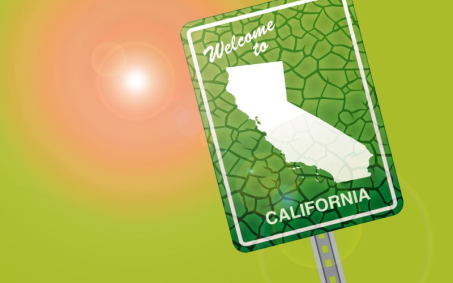
California’s drought and how it’s handled show just what kind of place the Golden State is becoming: feudal, super-affluent and with an impoverished interior.
California has met the future, and it really doesn’t work. As the mounting panic surrounding the drought suggests, the Golden State, once renowned for meeting human and geographic challenges, is losing its ability to cope with crises. As a result, the great American land of opportunity is devolving into something that resembles feudalism, a society dominated by rich and poor, with little opportunity for upward mobility for the state’s middle- and working classes.
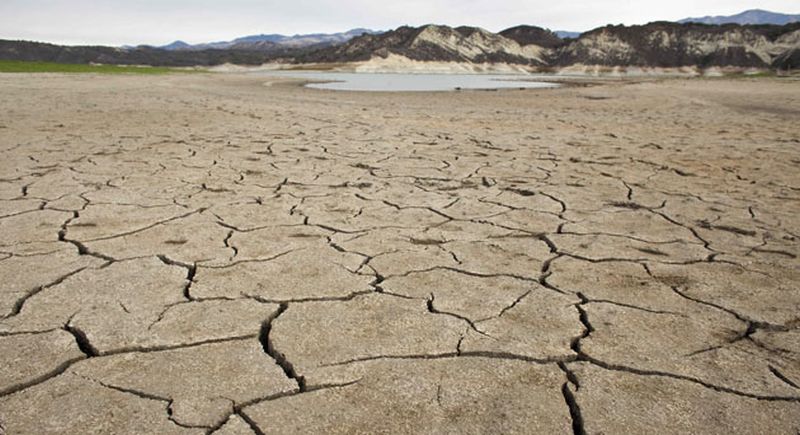
The water situation reflects this breakdown in the starkest way. Everyone who follows California knew it was inevitable we would suffer a long-term drought. Most of the state—including the Bay Area as well as greater Los Angeles—is semi-arid, and could barely support more than a tiny fraction of its current population. California’s response to aridity has always been primarily an engineering one that followed the old Roman model of siphoning water from the high country to service cities and farms.
But since the 1970s, California’s water system has become the prisoner of politics and posturing. The great aqueducts connecting the population centers with the great Sierra snowpack are all products of an earlier era—the Los Angeles aqueduct (1913), Hetch-Hetchy (1923), the Central Valley Project (1937), and the California Aqueduct (1974). The primary opposition to expansion has been the green left, which rejects water storage projects as irrelevant.
Yet at the same time greens and their allies in academia and the mainstream press are those most likely to see the current drought as part of a climate change-induced reduction in snowpack. That many scientists disagree with this assessment is almost beside the point. Whether climate change will make things better or worse is certainly an important concern, but California was going to have problems meeting its water needs under any circumstances.
Not Meeting the Challenges.
It’s not like we haven’t been around this particular block before. In the 1860s, a severe drought all but destroyed LA’s once-flourishing cattle industry. This drought was followed by torrential rains that caused their own havoc. The state has suffered three major droughts since I have lived here—in the mid ’70s, the mid ’80s and again today—but long ago (even before I got there) some real whoppers occurred, including dry periods that lasted upwards of 200 years.
This, like the threat of earthquakes, is part of the price we pay to live in this most beautiful and usually temperate of states. The real issue is how to meet this challenge, and here the response has been slow and lacking in vision. Not all of this is to be blamed on the greens, who dominate the state politically. California agriculture, for example, was among the last in the nation to agree to monitoring of groundwater. Farmers have also been slow to adjust their crops toward less water-dependent varieties; they continue to plant alfalfa, cotton, and other crops that may be better grown in more water-rich areas.
Many cities, too, have been slow to meet the challenge. Some long resisted metering of water use. Other places have been slow to encourage drought-resistant landscaping, which is already pretty de rigeur in more aridity-conscious desert cities like Tucson. This process may take time, but it is already showing value in places like Los Angeles where water agencies provide incentives.
But ultimately the responsibility for California’s future lies with our political leadership, who need to develop the kind of typically bold approaches past generations have embraced. One step would be building new storage capacity, which Governor Jerry Brown, after opposing it for years, has begun to admit is necessary. Desalinization, widely used in the even more arid Middle East, notably Israel, has been blocked by environmental interests but could tap a virtually unlimited supply of the wet stuff, and lies close to the state’s most densely populated areas. Essentially the state could build enough desalinization facilities, and the energy plants to run them, for less money than Brown wants to spend on his high-speed choo-choo to nowhere. This piece of infrastructure is so irrelevant to the state’s needs that even many progressives, such as Mother Jones’ Kevin Drum, consider it a “ridiculous” waste of money.
We are producing a California that is the polar opposite of Pat Brown’s creation.
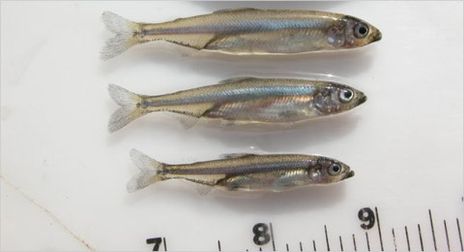
And there needs to be, at least for the short term, an end to dumping water into San Francisco Bay for the purpose of restoring a long-gone salmon run, or to the Delta, in order to save a bait-fish, the Delta smelt, which may already be close to extinct. This dumping of water has continued even as the state has faced a potentially crippling water shortage; nothing is too good for our fish, or to salve the hyper-heated consciousness of the environmental illuminati.
The Political Equation
The biggest reason California has been so slow, and uncharacteristically feckless, in meeting this existential challenge lies with psychology and ends with political power. The generation that built the sinews of modern California—most notably the late Governor Pat Brown Sr., the current governor’s father—sprang from the old progressive spirit which saw in infrastructure development a chance not only to create new wealth, but also provide opportunity to working- and middle-class Californians.
Indeed, if you look at California’s greatest achievements as a society, the Pat Brown legacy stands at the core. The California Aqueduct turned vast stretches of the Central Valley into one of the most productive farming regions in the world. The freeway system, now in often shocking disrepair, allowed for the construction of mass suburbia that offered millions a quality of life never experienced by previous generations. At the same time the development of energy resources—California still boasts the nation’s third-largest oil production—helped create a huge industrial base that included aerospace, semiconductors, and a host of specialized industries, from logistics to garment manufacturing.
In contrast, Jerry Brown has waged a kind of Oedipal struggle against his father’s legacy. Like many Californians, he recoiled against the sometimes haphazard and even ugly form of development that plowed through much of the state. Cutting off water is arguably the most effective way to stop all development, and promote Brown’s stated goal of eliminating suburban “sprawl.” It is typical that his first target for cutbacks this year has been the “lawns” of the middle-class suburbanite, a species for which he has shown little interest or tolerance.
But it’s not just water that exemplifies the current “era of limits” psychology. Energy development has always been in green crosshairs and their harassment has all but succeeded in helping drive much of the oil and gas industry, including corporate headquarters, out of the state. Not building roads—arguably to be replaced by trains—has not exactly reduced traffic but given California the honor of having eight of the top 20 cities nationally with poor roads; the percentage of Los Angeles-area residents who take transit has, if anything, declined slightly since train-building began. All we are left with are impossible freeways, crumbling streets, and ever more difficulty doing anything that requires traveling.
The Road to Feudalism
These policies have had numerous impacts, like weakening California’s industrial sector, which cannot afford energy prices that can be twice as high as in competing states. Some of those who might have worked in the factories, warehouses, and farms of California now help swell the numbers of the welfare recipients, who remarkably make up one-third of the nation’s total. As recently as the 1970s and ’80s, the percentage of people living in poverty in California was below the national average; California today, based on cost of living, has the highest poverty rate in the country.
Of course, the rich and entitled, particularly in Silicon Valley have achieved unprecedented riches, but those middle-class Californians once served by Pat have largely been abandoned by his son. California, long a relative beacon of equality and opportunity, now has the fourth-highest rate of inequality in the country. For those who, like me, bought their first home over 30 years ago, high housing prices, exacerbated by regulation, are a personal piggybank. But it’s doubtful either of my daughters will ever be able to buy a house here.
What about “green jobs”? California leads in total number of green jobs, simply by dint of size, but on a per-capita basis, a recent Brookings study notes, California is about average. In wind energy, in fact, California is not even in first place; that honor goes to, of all places, Texas, which boasts twice California’s level of production. Today even The New York Times has described Governor Jerry Brown’s promise about creating a half-million green jobs as something of a “pipe dream.” Even surviving solar firms, busy in part to meet the state’s strict renewable mandates, acknowledge that they won’t be doing much of the manufacturing here, anyway.
The Cost of Narcissism
Ultimately this is a story of a state that has gotten tired, having lost its “animal spirits” for the policy equivalent of a vegan diet. Increasingly it’s all about how the elites in the state—who cluster along the expensive coastal areas—feel about themselves. Even Brown knows that his environmental agenda will do little, or nothing, to combat climate change, given the already minimal impact of the state on carbon emissions compared to escalating fossil fuel use in China, India and elsewhere. But the cosmopolitan former Jesuit gives more priority to his spiritual service to Gaia than the needs of his non-affluent constituents.
But progressive narcissism is, as some conservatives assert, not the main problem. California greens are, to be sure, active, articulate, well-organized, and well-financed. What they lack is an effective counterpoint from the business class, who would be expected to challenge some of their policies. But the business leadership often seems to be more concerned with how to adjust the status quo to serve privileged large businesses, including some in agriculture, than boosting the overall economy. The greens, and their public-sector allies, can dominate not because they are so effective as that their potential opposition is weak, intimidated, and self-obsessed.
What we are witnessing the breakdown of a once-expansive, open society into one dominated by a small group of plutocrats, largely in Silicon Valley, with an “amen” crew among the low-information donors of Hollywood, the public unions, the green lobby, and wealthy real estate developers favored by Brown’s pro-density policies. This coalition backs Brown and helps maintain the state’s essentially one-party system. No one is more adamant about reducing people’s carbon footprint than the jet set of Silicon Valley or the state’s planning elite, even if they choose not to live in a manner that they instruct all others.
This fundamentally hypocritical regime remains in place because it works—for the powerful and well-placed. Less understandable is why many Hispanic politicians, such as Assembly Speaker Kevin de Leon, also prioritize “climate change” as his leading issue, without thinking much about how these policies might worsen the massive poverty in his de-industrializing L.A. district—until you realize that de Leon is bankrolled by Tom Steyer and others from the green uberclass.
So, in the end, we are producing a California that is the polar opposite of Pat Brown’s creation. True, it has some virtues: greener, cleaner, and more “progressive” on social issues. But it’s also becoming increasingly feudal, defined by a super-affluent coastal class and an increasingly impoverished interior. As water prices rise, and farms and lawns are abandoned, there’s little thought about how to create a better future for the bulk of Californians. Like medieval peasants, millions of Californians have been force to submit to the theology of our elected high priest and his acolytes, leaving behind any aspirations that the Golden State can work for them too.
Joel Kotkin is the RC Hobbs Fellow in Urban Futures at Chapman University in Orange, California, and director of the Houston-based Center for Opportunity Urbanism. His last book, The New Class Conflict, was published by Telos Press Publishing in 2014.
Like this:
Like Loading...





 Cathy
Cathy chulai1968
 Truth Prevailing
 Publius Huldah
 Freedom Rider
 kathleen
 radioroger2015
 revaustinmiles
 Steve
Steve truckjunkie