
Tag Archives: Iran nuclear deal

Trump, Cruz join forces to try to sink Obama’s Iran deal

BY GARTH KANT FOR WND.COM
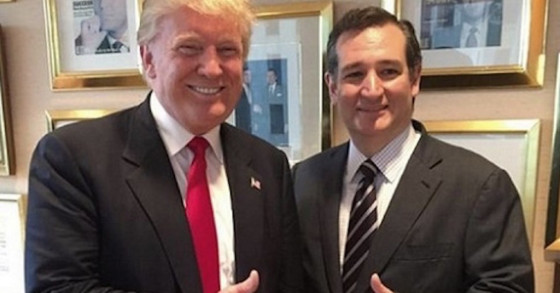
TRUMPCRUZRepublican presidential candidates Donald Trump and Sen. Ted Cruz, R-Texas

WASHINGTON – While other Republican presidential candidates are taking swipes at front-runner Donald Trump, Sen. Ted Cruz, R-Texas, is instead joining forces with him to try to stop President Obama’s nuclear deal with Iran.

Cruz invited Trump to join a Capitol Hill rally and Trump accepted, telling people at an event in South Carolina, it will be “essentially a protest against a totally incompetent deal we’re making with Iran.”

Cruz tweeted that he was glad Trump had accepted the invitation.

A statement from Catherine Frazier, national press secretary for the Cruz presidential campaign, said:

“Sen. Cruz has invited Donald Trump to join him on the Capitol grounds for a rally to call on members of Congress to defeat the catastrophic deal that the Obama administration has struck with the Islamic Republic of Iran. The event will be sponsored by Tea Party Patriots, Center for Security Policy, and the Zionist Organization of America. We are thankful for all their hard work on this effort and will have more details on time, date, and location as they are finalized.”

The Tea Party Patriots have since announced the rally will be on Wednesday, Sept. 9, on the West Lawn of the Capitol.

“This deal does not prevent Iran from getting nuclear weapons; it virtually guarantees it. Congress must reject this terrible deal,” said Jenny Beth Martin, the CEO and co-founder of Tea Party Patriots.
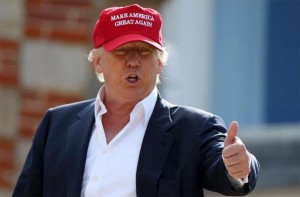
MOBILE

Donald Trump in Mobile, Alabama

While some of the other GOP candidates, notably Jeb Bush, have attacked Trump and become ensnared in a war of words, Cruz has refrained. The senator has said he agrees with Trump on many key issues.

Trump joked Thursday he wouldn’t “hit” Cruz who has been “so nice.” But Trump kiddingly added, “I may have to if he starts getting really close.”

Cruz and Trump met earlier this summer in New York but did not reveal what they discussed.

Obama’s Iran deal has been blasted by critics as dangerously unrealistic.

Even top Democrats have come out against it.

Sens. Chuck Schumer, D-N.Y., and Bob Menendez, D-N.J., both plan to vote for an upcoming Senate bill disapproving of the deal.

J.B. Pritzker, a lifelong Democrat who chaired Hillary’s 2008 campaign, wrote last week:

“Regrettably, the Iran deal fails to meet these goals and raises the prospects for war … By legitimizing Iran’s nuclear program, removing the pressure of economic sanctions and allowing it to obtain conventional weapons and ballistic missiles, this agreement makes the prospect for war more likely, not less.”

President Bill Clinton’s CIA director, James Woolsey, also wrote last week:

“Congress must stop President Obama’s nuclear deal with Iran. The most important reason — Iran can threaten the existence of the United States by making an electromagnetic pulse (EMP) attack using a single nuclear weapon.”

WND has worked extensively with one of the groups sponsoring the anti-Iran deal rally, the Center for Security Policy.

LOPEZ

Middle East analyst Clare Lopez of the Center for Security Policy

Clare Lopez, the group’s vice president, is one of the top experts on Iran.

She told WND the Cruz and Trump rally is “a great development, because these two are among the sharpest, best-informed of the entire candidate lineup,” and that the duo “speak out forthrightly about what they believe.”

“To see them taking a public stance against this disaster of a deal is important and encouraging,” concluded Lopez.

Earlier this week, she told WND she concurred with the detailed assessment recently published by John Bolton, the former U.S. ambassador to the U.N., that only a military strike can now stop Iran’s nuclear weapons program.

And Lopez told WND she agreed that such a strike “does not necessarily mean all-out war.”

While she also agreed with Bolton that stopping President Obama’s nuclear deal will not prevent Iran from getting the bomb, Lopez still stressed the importance of having Congress reject the agreement.

She insisted it’s worth voting down the deal as an expression of the will of the American people and their recognition that it is a bad deal, and because there seems to be some indication that Iranian Supreme Leader Ali Khamenei will make his own decision, up or down, based on the vote in Congress.

“As Iranian experts have explained to me, and as (Iran expert and former Harvard professor) Daniel Pipes has also written, there is strong opposition to this deal inside the Iranian regime itself. And the embarrassment before the world should Congress indeed vote it down would be unbearable to the supreme leader,” said Lopez.

She said that means Khamenei “cannot get out in front. Nor is the Majlis (the Iranian parliament) likely to vote on it before Congress. This makes Congress’s vote even more important than many may realize.”

Lopez was an instructor for military intelligence and special forces students; has been a consultant, intelligence analyst and researcher within the defense sector; has published two books on Iran; and has an analytical acumen honed by 20 years as a CIA field operative.

She appeared as a speaker at a “Stop Iran Rally” recently in Cleveland and another rally in Santa Barbara, California, on Sunday.
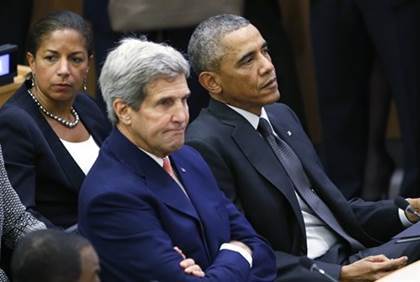
KERFUCK

National Security Adviser Susan Rice, Secretary of State John Kerry and President Barack Obama

“Absolutely insane,” was the succinct reaction from Lopez to WND on the revelations last week of details in the secret side deals in Obama’s nuclear agreement with Iran.

The Associated Press had confirmed a pair of stunning details in the agreement:

  • A secret side deal lets Iran decide which sites to inspect.
  • The side deal also lets Iran do the inspections at a key site.

AP reported it had reviewed a document outlining the side deal between Iran and the International Atomic Energy Agency, or IAEA.

In a nutshell, the secret side deal would:

  • Let Iran use its own inspectors to investigate the Parchin site where experts suspect it has been developing nuclear arms.
  • Let Iran provide the IAEA its own photos and and videos of suspect locations, while, “taking into account military concerns.”
  • AP said that wording suggests international inspectors will be barred from sites Iran declares have “military concerns.”
  • AP said the wording also suggests the IAEA won’t get photo or video information from areas Iran says are off limits because they have military significance.
  • While the document says the IAEA “will ensure the technical authenticity” of Iran’s inspection, it does not say how.

“Never before did the IAEA simply allow a party suspected of violations to inspect themselves,” a stunned Lopez told WND.

There is apparently more than one side deal.

AP reported the document is labeled “separate arrangement II,” which indicates there is at least one more confidential agreement between the IAEA and Iran.

AP said the document it reviewed is a draft, but “one official familiar with its contents said it doesn’t differ substantially from the final version.”

The IAEA chief told Republican senators two weeks ago that he could not let them see the side deal.

“Enough,” responded Cruz.

“Enough of the concessions, capitulations and backroom deals that make up President Obama’s catastrophic nuclear deal with the Islamic Republic of Iran. The most recent revelation that Iran will be selecting its own inspectors to verify the nature of its nuclear program is made all the more egregious by the fact that as the single largest contributor to the IAEA (support that is mandated in the deal) United States taxpayers will be paying for a farce that is a direct threat to their own security.”

Cruz concluded, “This is not a partisan issue. It is not about President Obama’s political legacy. It is about the future of our country, and that of our allies. We have to stop this disastrous deal.”
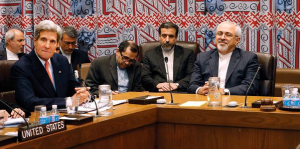
NUKE DEAL

Iran nuclear deal negotiators

Lopez rhetorically asked WND: “Why do inspections at all at sites deemed ‘suspect’ if those suspected of doing something that violates the deal are going to be trusted, essentially, with inspecting themselves?

“Was there ever anything more absurd?” she wondered incredulously.

“That’s not how the IAEA inspects any other country with a nuclear program. When (former Libyan leader Moammar) Gadhafi gave up his weapons of mass destruction program, the various agency inspectors were given access everywhere to verify that he’d genuinely given up.

“When South Africa terminated its nuclear weapons program under IAEA supervision, the government welcomed the inspectors and gave them access to wherever they needed to go. It’s attitude was one of cooperation and transparency. That’s not how Saddam Hussein behaved, and it’s not how Iran’s regime is behaving now,” she concluded.

Critics of the Iran deal say it is based on trust of the Iranian regime while the administration claimed on Wednesday “the IAEA has separately developed the most robust inspection regime ever peacefully negotiated.”

AP reported, “The agreement in question diverges from normal procedures by allowing Tehran to employ its own experts and equipment in the search for evidence of activities it has consistently denied – trying to develop nuclear weapons.”

The deputy IAEA director general in charge of the Iran probe from 2005 to 2010 told AP he could think of no similar concession with any other country.
SAT

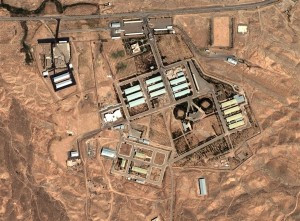
Satellite image of Parchin nuclear facility

Secretary of State John Kerry said in April that, under the deal, Iran would allow the IAEA to inspect anywhere it wants. He would later deny saying that, while testifying under oath to Congress.

After the deal was concluded, Kerry told senators on July 23 he “never uttered the words anywhere, anytime” regarding inspections of Iran’s facilities, and claimed “it was never part of negotiations.”

That’s not what the Obama administration said in April, and it directly contradicted what Deputy National Security adviser Ben Rhodes promised back then, when he said the International Atomic Energy Agency would have immediate access to any Iranian nuclear site.

Rhodes has since flip-flopped and directly contradicted himself.

On April 6, he said, “Under this deal, you will have anywhere, anytime, 24/7 access as it relates to the nuclear facilities that Iran has.”

On July 14, he said, “We never sought in this negotiation the capacity for so-called anytime, anywhere” inspections.

Parchin is just one of the sites where Iran has not permitted IAEA inspectors to go.

Iran has denied any nuclear weapons work was done at Parchin but has never allowed access to the site. The IEAE suspects Iran experimented on nuclear detonators at Parchin, based on U.S., Israeli and other intelligence.

Work at Parchin stopped more than decade ago, but the IAEA has cited satellite image evidence of apparent attempts to clean the site.

Lopez told WND in April that if “you read between the lines” of its report back in November 2011, it was clear that even the IAEA believed Iran had been working on a nuclear warhead as well as the explosive triggers for initiating the implosion sequence.

She also said, “All the evidence suggests Iran already has nuclear warheads.”

Worse yet, she said the Obama administration almost certainly knows that.

“IAEA (International Atomic Energy Agency) reporting over recent years indicates at a minimum they strongly suspect that Iran already has built nuclear warheads. It’s certainly known that Iran has long range ICBMs (intercontinental ballistic missiles.)”

Lopez added, “They’ve had the information how to build a warhead for a long time. They’ve had expert assistance from, at a minimum, North Korea and Pakistan.”

“They’re documented by the IAEA as having engaged in activities related to warhead development. There are satellite images from Parchin of what are believed to be ‘containers’ in which warhead triggers were tested. And Iranian officials have been reported present in North Korea during nuclear tests.”

Follow Garth Kant @DCgarth

Related columns:

Megyn, Jorge and a Reaganesque Trump by Ilana Mercer

Trump ascendancy shows GOP is brain-dead by Bill Press
 

Gulf States Want U.S. Assurances and Weapons in Exchange for Supporting Iran Nuclear Deal

We’ve heard that many Arab leaders are peeing in their caftans in response to Obama’s nuclear rapprochement with Iran. Now we’re beginning to see the results. As Obama’s deal with Iran gets closer, the panicky Gulf States are asking for assurances, weapons and security pacts from Obama before they take matters in their own hands. Can you spot the problems with anything Obama might promise them?

  • It’s hard to take anything the man says seriously.
  • Would you stake the life of your country on his word?
  • Then there’s that pesky Congress. Even if they cave, it will take some time, and a nuclear deal will be signed by then.
  • The whole unstable region will become, well, more unstable. Boys can’t wait to play with their new toys.
  • Nothing beats having nuclear weapons in your back pocket, just for use during emergencies.
  • Obama will (hopefully) be gone in a short time and no one knows who will follow his act.
  • Only madmen would use nuclear weapons. Remind you of anyone?
  • Obama has shown his weak hand and his strong intentions to appease Iran.
  • Only last week he looked away while Iran commandeered a ship that he was duty-bound to protect.
  • Everything in Obama’s mind (sic) is subordinate to making “the deal.” Ergo, anything he says is disingenuous and born of expediency.
  • There’s a more reliable way for the Gulf states to guarantee their security: reach understandings with someone you can trust. Israel.

Regional leaders seek quid pro quo of fighters, missile batteries, surveillance equipment

By JAY SOLOMON And CAROL E. LEE for the WSJ

WASHINGTON—Leading Persian Gulf states want major new weapons systems and security guarantees from the White House in exchange for backing a nuclear agreement with Iran, according to U.S. and Arab officials.

The leaders of the six-nation Gulf Cooperation Council, including Saudi Arabia, the United Arab Emirates and Qatar, plan to use a high-stakes meeting with President Barack Obama later this month to request additional fighter jets, missile batteries and surveillance equipment.

They also intend to pressure Mr. Obama for new defense agreements between the U.S. and the Gulf nations that would outline terms and scenarios under which Washington would intervene if they are threatened by Iran, according to these officials.

The demands underscore what complicated diplomatic terrain Mr. Obama is navigating as he drives toward one of his top foreign-policy goals, and they demonstrate how a nuclear deal with Iran aimed at stabilizing the Middle East risks further militarizing an already volatile region.

Gulf leaders have long sought to bolster their military arsenals, but the requests pose problems for U.S. officials who want to demonstrate support for Arab allies, many of whom host American military bases, while also ensuring Israel maintains a military advantage in the region.

Any moves by Mr. Obama to meet Arab leaders’ requests could face headwinds in Congress and new friction with Israel, given the continuing negotiations on an Iran nuclear deal.

“I’m very worried that President Obama will promise every military toy they’ve always wanted and a security agreement short of a treaty, with the understanding they have to be sympathetic to this deal,” said Sen. Lindsey Graham (R., S.C.). “If I get a hint of that, a whiff of that, then I would do everything I could to block every bullet and every plane.”

Rep. Eliot Engel of New York, the top Democrat on the House Foreign Affairs Committee, said White House officials have indicated Mr. Obama is seriously considering Arab leaders’ requests and he’d be shocked if some of them weren’t granted.

“These countries are in the most vulnerable geographical areas, and I think they have a legitimate concern about Iran,” said Mr. Engel, who has discussed the requests with Arab officials in recent weeks. But, he said, “We have to make sure that Israel’s qualitative military edge is kept.”

Mr. Obama is scheduled to host the leaders of Bahrain, Kuwait, Oman, Qatar, Saudi Arabia and the U.A.E. at the White House on May 13 and the following day at Camp David, the presidential retreat in Maryland.

The Persian Gulf countries say they need more drones, surveillance equipment and missile-defense systems to combat an Iranian regime they see as committed to becoming the region’s dominant power. The Gulf states also want upgraded fighter jets to contain the Iranian challenge, particularly the advanced F-35, known as the Joint Strike Fighter.

A senior U.S. official played down chances the administration would agree to sell advanced systems such as the F-35 fighter to those nations—though the planes will be sold to Israel and Turkey—because of concerns within the administration about altering the military balance in the Middle East.

Sales of such advanced equipment would also likely run into opposition from pro-Israel lawmakers who have the power to block transfers, the official said.

The challenge Mr. Obama faces at Camp David is to assuage growing fears among those Sunni countries that want military superiority over Shiite-dominated Iran, while not undermining longtime U.S. security guarantees to Israel.

Current law mandates that the U.S. uphold Israel’s qualitative military edge over its neighbors.

Saudi Arabia, the U.A.E. and Qatar share Israel’s concern about a nuclear deal with Iran, but haven’t diplomatic ties with Tel Aviv. A top concern among the Gulf nations and Israel is the expected unshackling of Tehran’s finances under the nuclear agreement that the U.S. and five other world powers are seeking with Iran by a June 30 deadline.

Iran’s neighbors fear such an influx of cash could allow the country to pour even more arms and funds into its military allies and proxies in Syria, Iraq, Lebanon and Yemen.

The outlines of the nuclear agreement, announced last month in Switzerland, calls for lifting international sanctions on Iran in exchange for curbs on its atomic work for at least a decade.

Under terms being discussed, the U.S. and its allies would also be required eventually to release more than $100 billion of Iran’s oil revenues now frozen in overseas bank accounts.

In anticipation of such a change, the Gulf states have stepped up consultations with the White House on creating new security arrangements, according to U.S. and Arab officials. “We have to be very clear about what the future looks such as ,” said a senior Arab official involved in discussions with the White House.

Mr. Obama had lunch at the White House last month with U.A.E. Crown Prince Mohammad bin Zayed Al Nahyan, at which they had an extensive discussion about security issues, according to the White House.

Secretary of State John Kerry is scheduled to meet with the Gulf states’ foreign ministers on May 8 in Paris.

Some Arab officials, in recent meetings with Obama administration officials, have raised the possibility of the Gulf Cooperation Council forging a mutual defense treaty with the U.S., similar to Japan’s or South Korea’s, according to people briefed on the talks. This would require Washington to intervene militarily if any member of the group came under attack by Iran or another enemy.

The Gulf states tempered this ambition, however, after conceding the Obama administration would face major obstacles in convincing Congress to approve such a treaty, in part because of U.S. lawmakers’ steadfast support for Israel. Instead, the GCC is seeking to establish clear guidelines for when the U.S. would act to check Iranian aggression.

Reaching a common position between the Gulf states and the Obama administration is a difficult task, U.S. and Arab officials say. The Obama administration has at times differed from Saudi Arabia and the U.A.E. in gauging the level of Iranian support for political rebellions in countries such as Yemen and Bahrain.

More recently, Saudi Arabia and its Gulf allies launched airstrikes on insurgents in Yemen, who they argue are receiving arms and funds from Iran—something Tehran denies.

On Tuesday, tensions flared when Iranian warships confronted a Marshall Islands-flagged cargo ship in the Strait of Hormuz, prompting the deployment of a U.S. Navy destroyer to the area and stepped-up U.S. measures to protect American commercial vessels.

A White House statement in advance of Mr. Obama’s GCC meeting said the session is designed for the leaders to “discuss ways to enhance their partnership and deepen security cooperation.”

Saudi Arabia, Qatar and the U.A.E. are already some of the largest arms buyers in the world. Last year, Riyadh purchased $80 billion worth of weapons, according to the Stockholm International Peace Research Institute, which tracks the global arms business. The U.A.E. bought $23 billion.

“The Gulf monarchies need a military edge over Iran,” said an American official engaged in the deliberations between the GCC and U.S.

Some of the Gulf states, in particular Saudi Arabia, have argued they should be allowed to obtain the same nuclear technologies Iran maintains as part of any diplomatic agreement with Washington. “We think there should be nuclear parity between us and Iran,” said an Arab official involved in the discussions.

But the Obama administration is expected to push back against any initiatives that risk further spreading sensitive nuclear technologies across the Mideast.

The U.S. commitment to Israel’s military superiority could undercut hopes for substantive agreements being reached at Camp David.

Israeli Prime Minister Benjamin Netanyahu shares the Arab governments’ belief that Iran poses the greatest security challenge to their region. But there remains fear in Israel that over the long term any sophisticated systems sold to the GCC countries could eventually be turned on Israel, according to Israeli officials.

Congress, as a result, may seek to block some of the arms deals being discussed. “We want to make sure that the one and only democracy in the region is never outgunned,” Mr. Graham said.

Write to Jay Solomon at [email protected] and Carol E. Lee at [email protected]

Dan Friedman NYC


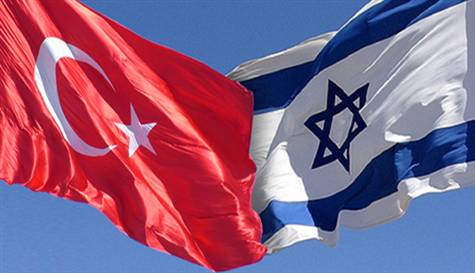
After Iran’s Nuclear Deal, Antichrist Turkey Is Now Preparing For A ‘Peace Deal’ WITH ISRAEL

Turkey, and while the U.S. makes a nuclear deals with Iran, Erdogan is attempting to make deals with both, Iran, to expand his alliance, and Israel, for a false peace deal. Turkey is honed in on Israel luring her into a peace deal, now more than ever.

To eliminate my ‘special prophetic effects’, I just posted the article as is, this way no one can say this is simply my projections. This is a time to see how the Bible speaks of these times more than ever. And while the world slumbers, this is the time to stay wide awake, keeping oil in your lamps, lest you be caught asleep when the Bridegroom suddenly comes. Today’s Zaman titled their article as, AK Party may get closer to Israel after Iran’s nuclear deal, here it is:

“The ruling Justice and Development Party (AK Party) has started to send a number of positive messages to Israel, after Iran‘s tentative nuclear deal with major world powers on April 2, which will likely upend the Middle East’s fragile balance of power while eliminating a major security concern in the region.

In a recent interview with Israeli television, Deputy Prime Minister Bülent Arınç said it would be a positive thing for Israel to pick Turkey as a partner, if it wants to start afresh with Turkey. He also said teaming up with Turkey would be good for Israel’s security.

Following Arınç’s remarks, Turkey’s Tel Aviv charge d’affaires Doğan Işık said Turkey and Israel are like two brotherly states and cannot be separated, despite the state of sour political relations between the two countries, in a meeting this weekend.

Turkey-Israel-Alliance

Işık recalled that there are eight daily flights from Tel Aviv to İstanbul and that all flights between Israel and the US and China to the US feature a stopover in İstanbul. A source from the Turkish Foreign Ministry speaking to Today’s Zaman said on Monday that “without a doubt, such a statement [sending a positive message to Israel] can only be made with the knowledge of Ankara.”

It was also learned by Today’s Zaman that Deputy Foreign Ministry Naci Koru has recently extended a message to the Israeli officials through diplomatic channels that Turkey wants to start afresh with Israel. Koru stated in his message to Israel that Turkey is ready to discuss normalizing relations with Israel.

The same source from the Foreign Ministry pointed out that clearly Turkey is sending positive messages to Israel.

Diplomatic ties between Turkey and Israel took a downturn in May of 2010 after Israeli commandos killed eight Turkish citizens and an American of Turkish origin in international waters on the Mavi Marmara ship. The Mavi Marmara was leading a “Gaza freedom flotilla” carrying humanitarian aid for Palestinians in the Gaza Strip, which has been under an Israeli blockade since 2007.

The Israeli ambassador was expelled from Ankara in September of 2011 after Israel refused to apologize for the killings. Israel formally apologized in 2013 for what it called “operational mistakes” that might have led to the deaths of the victims. Turkey and Israel have been negotiating a compensation deal, but an agreement has not yet been forthcoming.

After Israel’s Gaza offensive in the summer of 2014, comments about Israel by President Recep Tayyip Erdoğan have caused the rift between the two countries to deepen. Erdoğan said last July that Israel had agreed to lift its blockade of Gaza as part of normalization talks between Israel and Turkey but that Israel’s attack on Gaza reveals that it does not want normalization and so Turkey would delay the continuation of talks.

Turkey is also worried about Iran’s increasing its influence in the region. Last Thursday’s tentative nuclear agreement, which concluded after eight days of marathon talks in Switzerland, clears the way for talks on a future settlement and should allay Western fears that Iran is seeking to build a nuclear bomb and in return lift economic sanctions on Iran. However, the framework is contingent on reaching an agreement by June 30, and all sanctions on Iran remain in place until a final deal is reached.”